UZETA
Of the singular contest
JUNIOR SUITE ART ROOM
44 mq.
Junior Suite featuring two private balconies overlooking Via Auteri and Via Gisira.
Our Art Room features a monsoon-style sensory shower with waterfall, chromotherapy, a luxury Ortigia wellness set,
a professional hair dryer, hypoallergenic duvets and pillows, free Open Fiber Wi-Fi, USB ports in every room, a Smart TV, and air conditioning.
- Coffe Cockpit Nespresso
- LCS - Lights Coordination System by App
- Luxury scent menù
- MiniBar with Organic Products
- Safety box
- Smart TV- SKY TV
In other words, it tells of epic deeds, savage Moors, glorious paladins, and courtly love.
Of humble birth but strong and courageous, the young Uzeta fell hopelessly in love with the daughter of Frederick II; he therefore entered the king’s service, sparing no effort in demonstrating his valor and skill.
In a blend of legends, it is said that at that time two cruel twins ruled the land—Moorish warriors as brutal as they were skilled with weapons, yet ruthless murderers of valiant knights who attempted to stop their wickedness.
The Moors resided at Castel Ursino, and it was there that the brave Uzeta confronted them after crossing moats teeming with crocodiles. Despite being outnumbered, he prevailed, liberating the city of Catania. Proud of his feat, he dared to ask for the king’s daughter’s hand in marriage, but he was not of noble birth. The king had him imprisoned in one of the towers.
But the city rose to his defense, mindful of his valor and kindness, and the king had no choice but to knight him and give him his daughter’s hand in marriage.
Our art room is dedicated to his legend and the valor of the paladins.
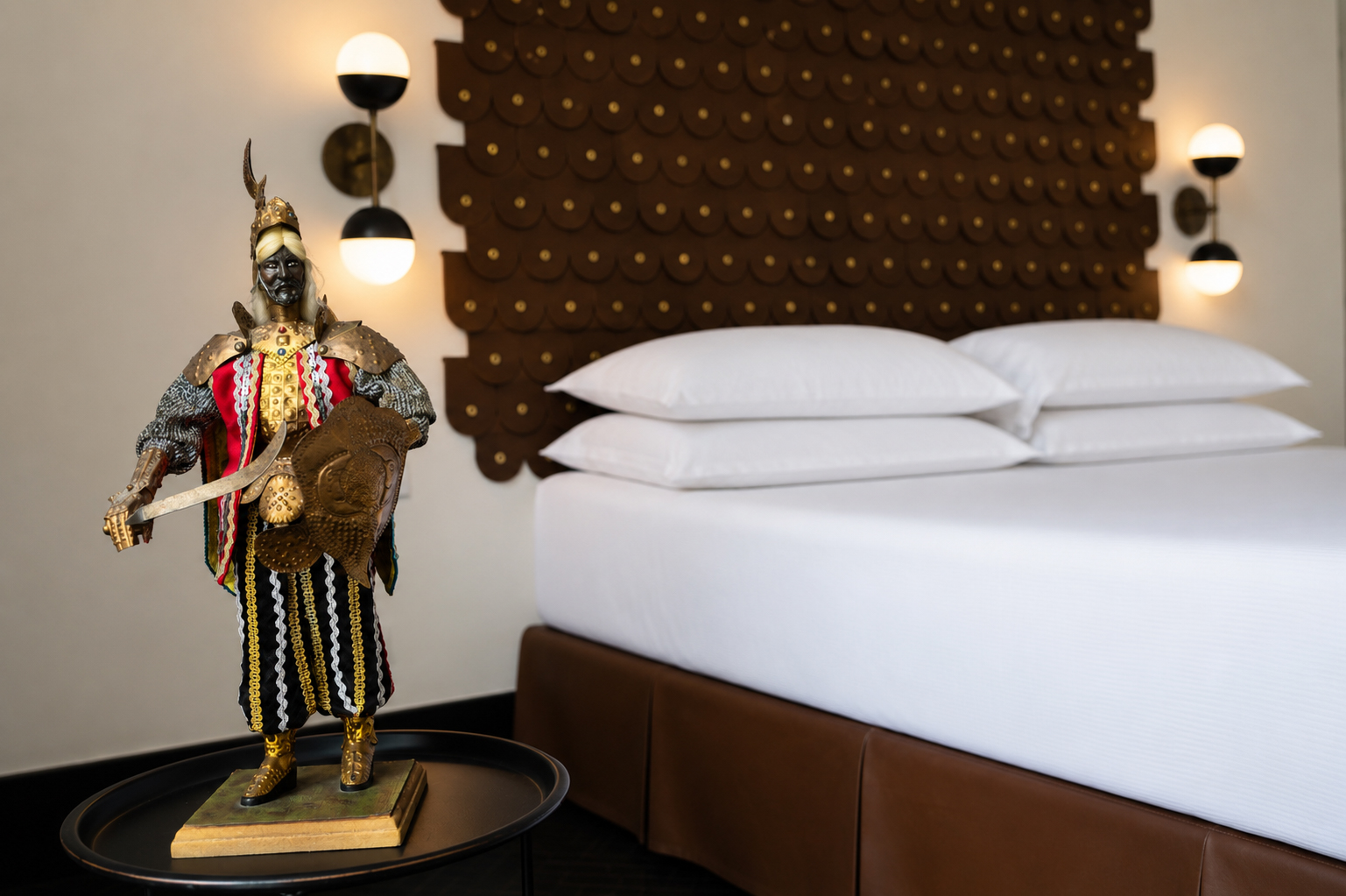
A Sicilian historical tradition passed down through the works of Sicilian puppets. Lying down and weary, we find the puppet (a sort of marionette) of Uzeta, faithful to traditional iconography, while the Moorish puppets stand at a distance, flanked by the heads of the defeated paladins.
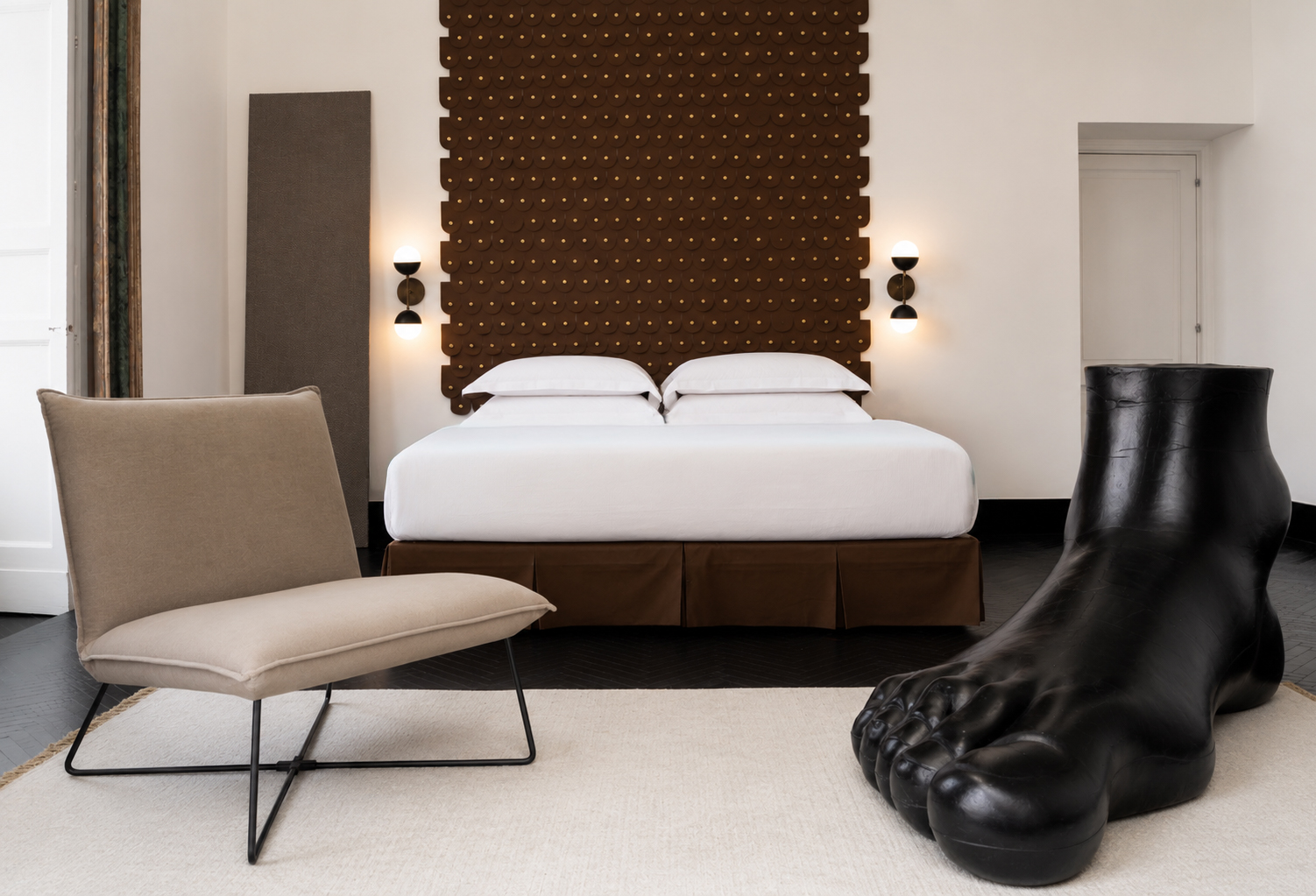
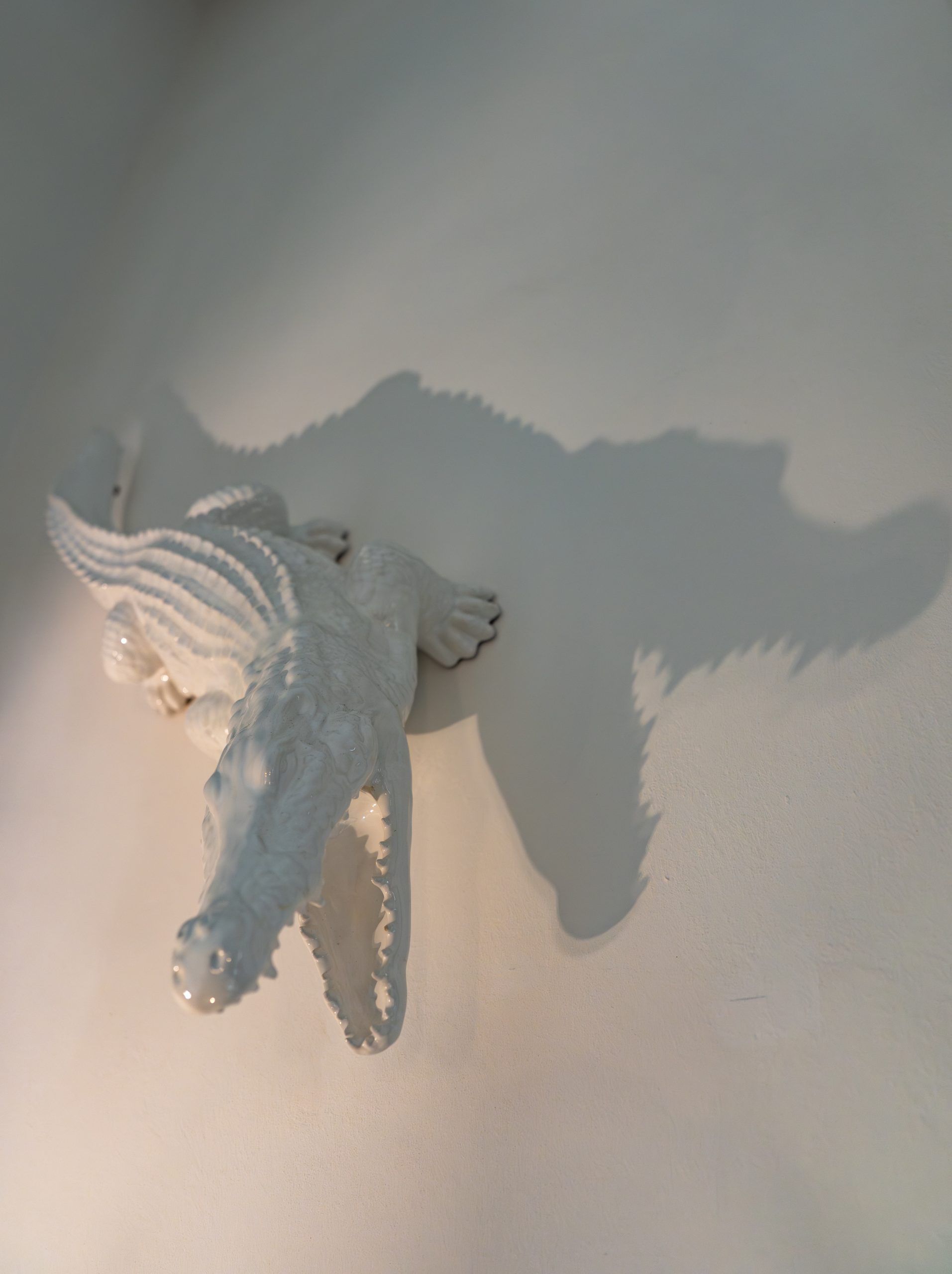
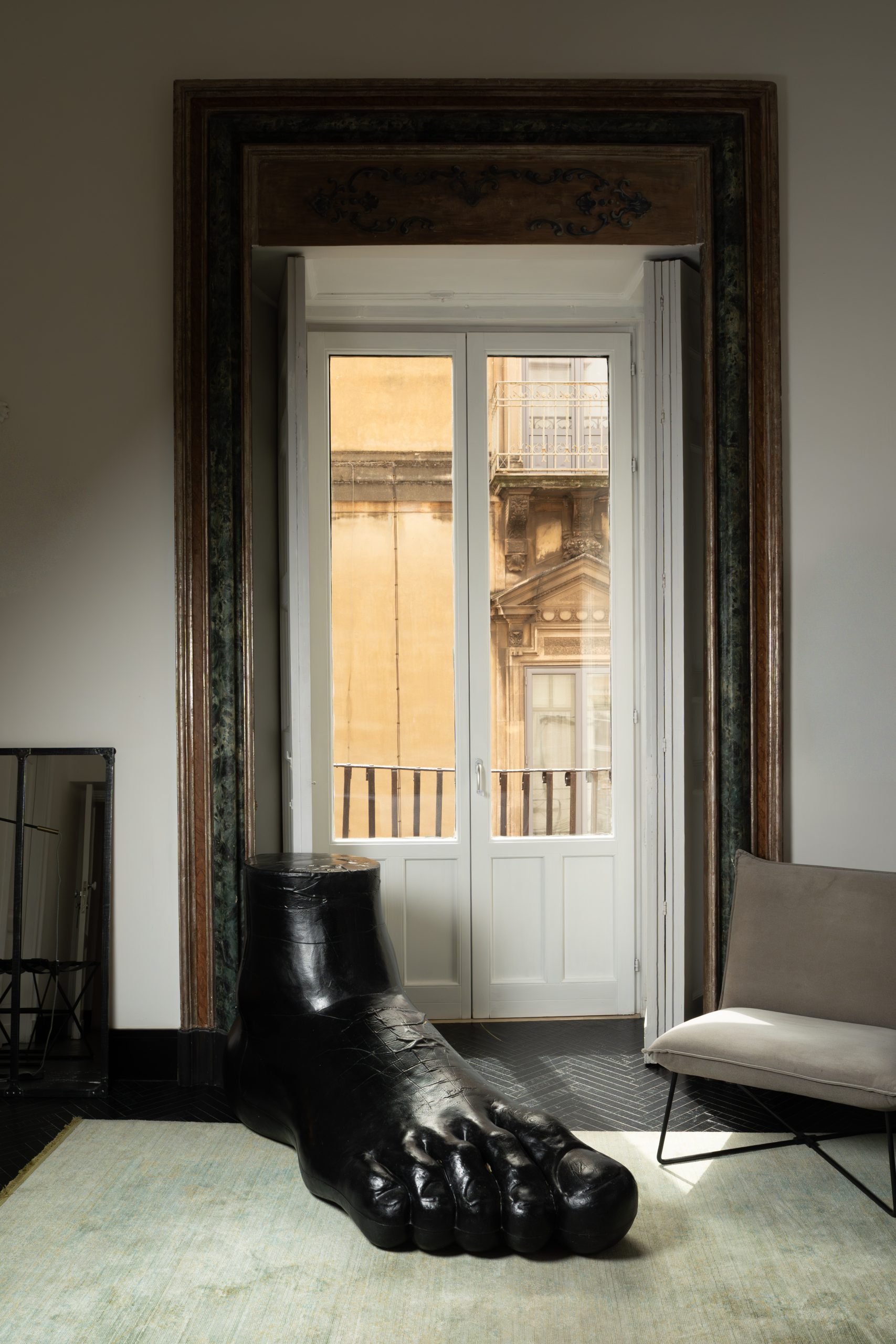
The iconography of Uzeta depicts him protected by a breastplate, which inspired the leather and brass installation on the bed depicting his armor, with his weapons—a chandelier/ mace, and his spears embedded in the walls, with which he confronts the crocodiles—idealized in white ceramic—and the Moors, alongside Gaetano Pesce’s 1969 work, *Il Piede* (The Foot), a sculpture/chair that was ahead of its time, eventually earning the honor of being exhibited at the MOCA in Los Angeles in 2014.
The iron and glass installation represents his prison, from which he received comfort from the people who removed his burnished and hammered helmet, turning it into a washbasin.
In the whirlwind of the rain-like cascade of water, where the chromatic nuances blend with the nineteenth-century cement tiles, one still seems to glimpse Uzeta holding his Bella by the hand.